






Introduction
The world of finance has always been shaped by technology. From traditional banks going online to the rise of mobile wallets, every era has seen a shift in how people interact with money. Today, the next wave of financial evolution is happening through interactive mini-apps small, gamified platforms embedded into messaging apps.
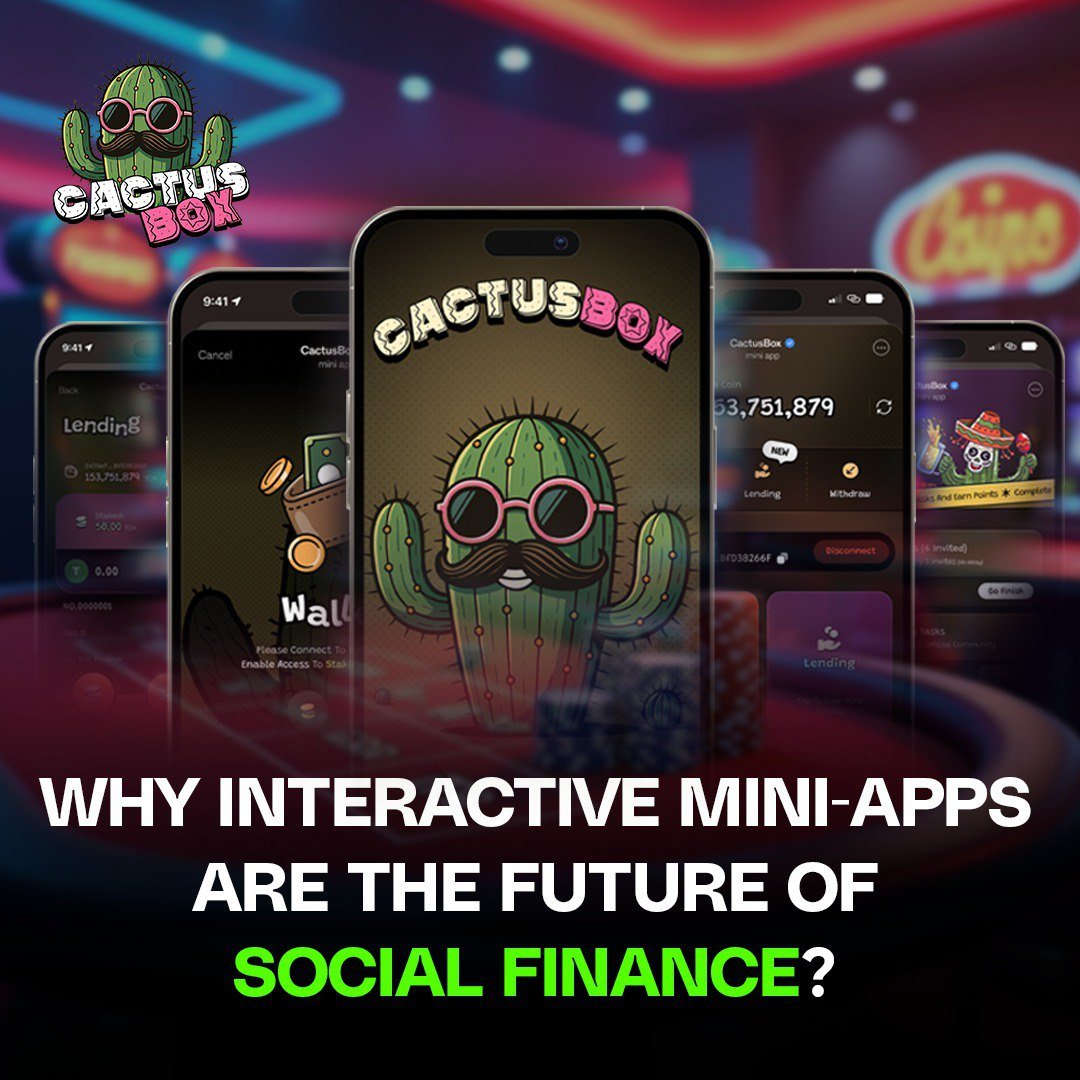
One of the most promising examples is CactusBox, a mini-app on Telegram that merges gaming with finance in a way that keeps users engaged, rewarded, and socially connected.
So why exactly are mini-apps being called the future of social finance? Let’s dive in.
1. Finance Meets Gamification
Traditional finance apps can feel intimidating—graphs, charts, and jargon scare many users away. Mini-apps flip that script. By introducing simple, gamified mechanics like spins, taps, and streaks, they make financial engagement fun.
On CactusBox, earning crypto isn’t about staring at numbers it’s about playing modes like BTC Speed or Bird & Cactus while your wallet grows.
2. Social Layer = Engagement Multiplier
Unlike standalone apps, mini-apps live inside messaging platforms like Telegram. This means they naturally tap into existing social networks.
When you play on CactusBox, you’re not playing alone. You can invite friends, share wins, and climb leaderboards together. Finance becomes social, and social becomes financial a loop that keeps users coming back.
3. Accessibility Without Barriers
One of the biggest advantages of mini-apps is zero friction entry. No long downloads, no complicated registrations just tap, play, and earn.
This accessibility is what makes platforms like CactusBox viral. Anyone, anywhere can join instantly and start interacting with both fun mechanics and financial rewards.
4. Micro-Rewards Build Macro-Impact
Micro-actions like daily spins, streaks, and small games might look trivial at first. But they create compounding value over time.
- For the brain: micro-rewards release dopamine, keeping users engaged.
- For the wallet: even small token rewards add up significantly in the long run.
That’s why mini-apps are the perfect bridge between casual play and serious finance.
5. Mini-Apps Are Community First
Social finance thrives on community trust and interaction. Unlike faceless trading platforms, mini-apps allow real-time sharing, group challenges, and transparent leaderboards.
On CactusBox, the community isn’t just an audience, it’s an active part of the ecosystem. This kind of social proofaccelerates growth and builds loyalty faster than traditional finance apps ever could.
6. The Future Is Embedded Finance
Mini-apps are the building blocks of embedded finance where financial tools exist inside everyday platforms. Instead of switching between 10 different apps, you can chat, play, earn, and transfer value all in one ecosystem.
With Telegram becoming the hub for Web3 adoption, CactusBox is positioned at the front of this shift. It’s not just a game, it’s a prototype of what social finance will look like globally.
Conclusion
Interactive mini-apps are more than just a trend; they’re a blueprint for the future of social finance. They combine fun, accessibility, social connection, and financial growth into a single experience that feels natural, not forced.
As more users embrace platforms like CactusBox, we’ll see finance evolve from something complicated and solitary into something interactive, social, and rewarding.











What do you think?
It is nice to know your opinion. Leave a comment.