






Introduction: A New Challenger Appears
For over a decade, crypto exchanges like Binance, Coinbase, and Kraken have been the primary gateways for people entering the world of digital assets. They offer trading, staking, and sometimes lending, but they’re often intimidating, overly technical, and heavily regulated.
Enter mini-apps, simple, gamified, and social platforms built inside ecosystems like Telegram. These aren’t just casual diversions. They could represent a shift in how people interact with crypto, blurring the lines between finance and play. In fact, mini-apps could someday replace traditional exchanges altogether.
Why Traditional Exchanges Feel Outdated
Before looking at the rise of mini-apps, it’s worth seeing why big exchanges may be losing their edge:
- Complex interfaces: Charts, order books, and technical jargon can overwhelm newcomers.
- High barriers to entry: Verifications, fees, and region-based restrictions slow down adoption.
- Lack of fun: Trading on exchanges feels like work, not play.
- Centralized control: Despite being “crypto-native,” many exchanges still mirror banks.
Mini-apps challenge these problems with simplicity, speed, and social engagement.
Mini-Apps: The Crypto Gateway 2.0
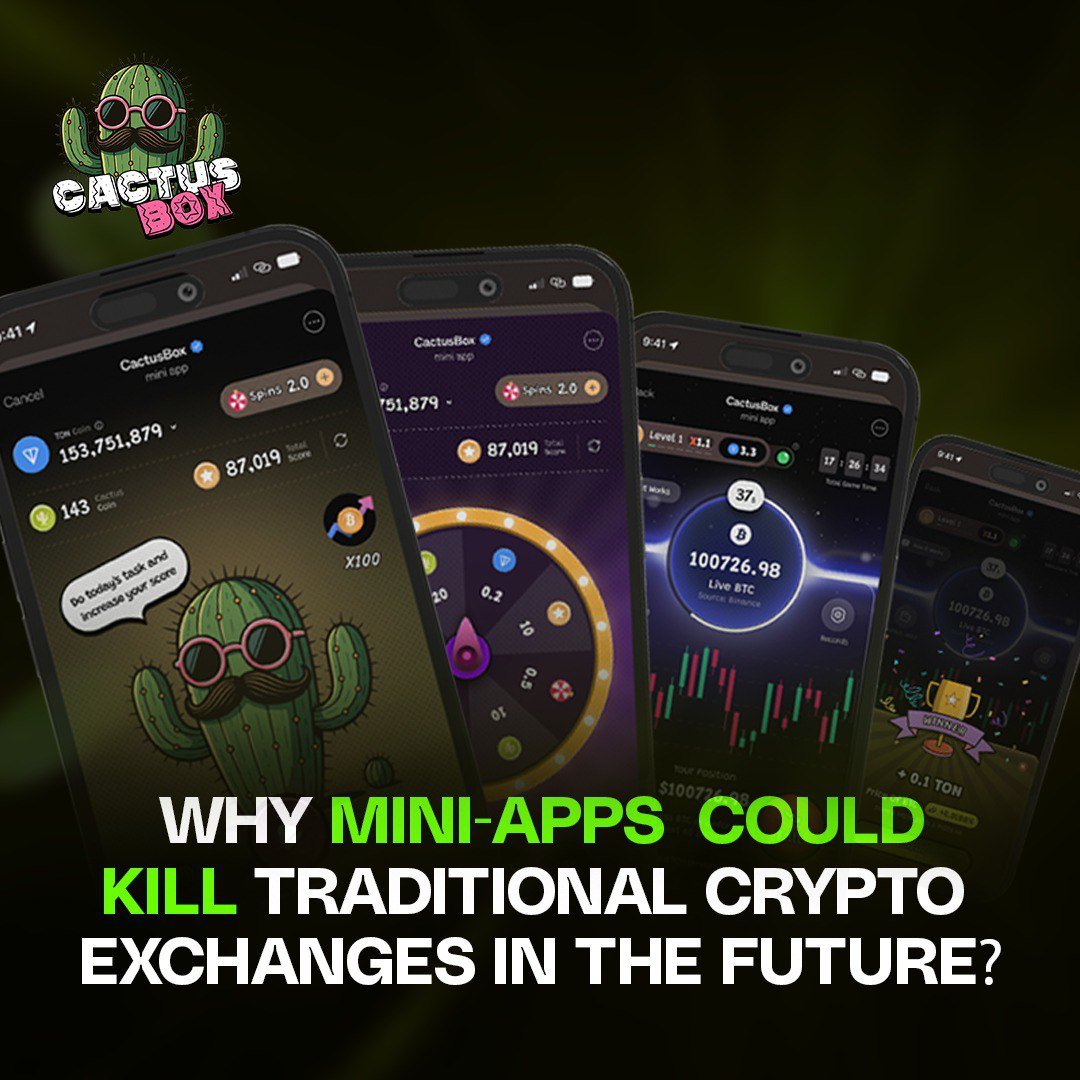
Platforms like CactusBox are showing that crypto doesn’t have to live in complex dashboards. Instead, it can thrive in a chat-based, interactive, and reward-driven format. Here’s how mini-apps differ:
- Seamless onboarding Connect your Telegram wallet in seconds, no KYC walls.
- Social-first You’re already inside a chat app with friends, communities, and referrals.
- Gamified finance Staking, lending, and rewards come through interactive games, not endless spreadsheets.
- Micro-rewards Instead of needing thousands to start, users can earn bit by bit, keeping engagement high.
This lowers the barrier dramatically bringing in casual users who would never touch Binance or Coinbase.
The Economic Edge: Why Mini-Apps Could Win
Exchanges dominate through liquidity and security, but mini-apps have their own advantages:
- Low-cost operations Mini-apps don’t require massive exchange infrastructures.
- Built-in virality Social sharing and referrals inside Telegram make growth faster.
- Community-driven economies Rewards systems and leaderboards keep people hooked without huge ad spend.
- Integration with DeFi Lending, staking, and swaps can be embedded into mini-games seamlessly.
Over time, as these apps grow user bases, network effects could outpace traditional exchanges especially among younger, mobile-first users.
The Future: Not Just Games, But Gateways
Mini-apps like CactusBox are starting with simple games and rewards, but the future might look much bigger:
- Imagine instant swaps between tokens without ever leaving Telegram.
- Picture P2P lending and borrowing done through in-game economies.
- Consider staking dashboards integrated into games you already play daily.
- Think about NFTs, skins, and leaderboards evolving into tradable assets.
This vision transforms mini-apps into micro-exchanges, hidden inside platforms people already use every day.
‘The Threat to Big Exchanges
Will mini-apps kill Binance or Coinbase tomorrow? Probably not. But history shows us that simplicity always beats complexity at scale. Just like mobile banking apps disrupted traditional banks, Telegram mini-apps could slowly chip away at the dominance of traditional crypto exchanges.
For millions of new users entering crypto through fun, gamified gateways like CactusBox, they may never feel the need to use a “real” exchange.
Conclusion: A New Era of Crypto Access
Mini-apps aren’t just games or distractions. They represent a new philosophy for Web3 adoption: make it simple, social, and rewarding. If traditional exchanges don’t adapt, they could soon find themselves obsolete, replaced by lighter, faster, and more engaging alternatives.
In the future, your biggest crypto trade might not happen on a chart-heavy exchange at all; it might happen in the same Telegram app where you chat with friends.











What do you think?
It is nice to know your opinion. Leave a comment.