


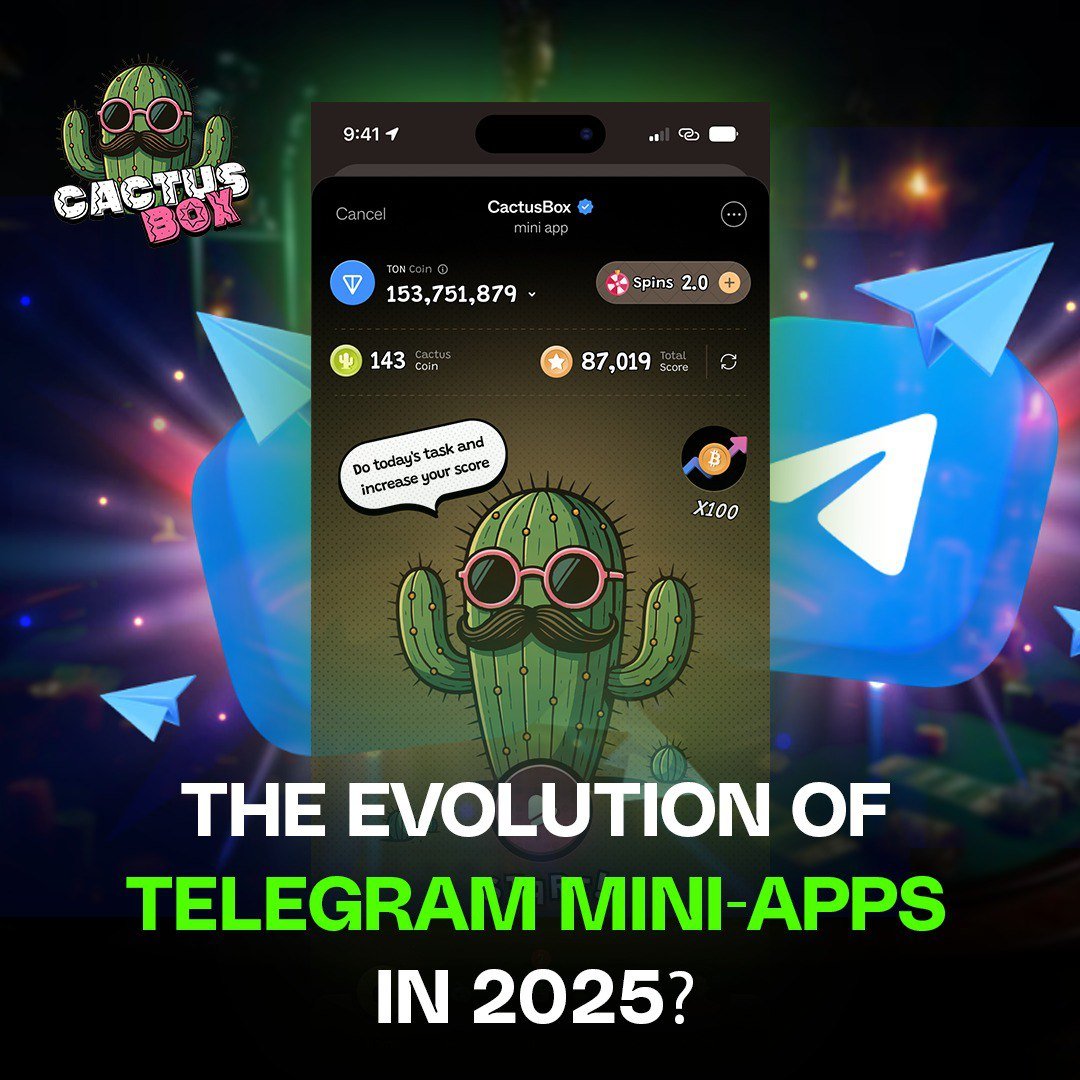




When Telegram first introduced mini-apps, most people saw them as fun add-ons lightweight games, productivity tools, and quick utilities. But in 2025, the landscape has shifted dramatically. Mini-apps are no longer just side projects; they’re core ecosystems driving user engagement, community growth, and even financial innovation.
One of the clearest examples is CactusBox, a Telegram-based mini-app where users play games, complete challenges, and earn crypto rewards all without leaving the messaging platform.
From Bots to Full Ecosystems
A few years ago, Telegram bots were simple: they sent reminders, shared jokes, or tracked tasks. But in 2025, mini-apps have evolved into ecosystems where users can interact, transact, and progress. What started as small experiments has now turned into micro-economies.
Gamification at the Core
Mini-apps in 2025 are built around gamification. Whether it’s leaderboards, streaks, or daily spins, these apps know how to keep users engaged. Unlike static social media platforms, mini-apps give users a reason to return every day because each login offers progress, achievement, and sometimes financial gain.
The Rise of Financial Mini-Apps
The biggest evolution is happening in finance-focused mini-apps. Instead of needing a full exchange or wallet app, users now handle crypto transactions right inside Telegram. Apps like CactusBox combine play with earning, while others enable instant lending, staking, or swaps. This shift makes Telegram not just a messenger, but a financial playground.
Social + Finance = SocialFi
Mini-apps aren’t just about solo interaction. In 2025, they are social-first. Competing with friends, sending invites, and climbing leaderboards makes progress more rewarding. This blend of social networking and finance often called SocialFi is one of the strongest reasons mini-apps are thriving.
Integration with Everyday Habits
Unlike standalone apps that demand new downloads, mini-apps live inside the platforms people already use daily. Telegram users don’t have to leave their chats to play, earn, or trade. This seamless integration is what makes mini-apps addictive they’re always just one tap away, fitting naturally into daily habits.
What’s Next for Mini-Apps?
Looking ahead, 2025 feels like just the beginning. The next stage could include:
- AI-powered assistants for smarter gameplay and investing
- Cross-app economies where progress in one mini-app carries into another
- Deeper financial tools that blur the line between gaming and investing
- Wider adoption as Telegram moves closer to becoming a super-app
Conclusion
The story of Telegram mini-apps is no longer about simple bots it’s about ecosystems, rewards, and financial innovation. CactusBox shows where things are heading: fun and finance merging into a single experience. By 2025, mini-apps aren’t just competing with games and tools, they’re redefining how people interact with the digital economy. The evolution is clear: Telegram mini-apps are no longer optional they’re the future.











What do you think?
It is nice to know your opinion. Leave a comment.